
Downspout Drain Cleaning
TL;DR: Regular downspout drain cleaning removes debris from gutters, downspouts, and underground pipes so water can move safely away from your home. For Utah homeowners, routine cleaning helps manage snowmelt, seasonal debris, and freeze-thaw conditions while reducing the risk of overflow, foundation problems, and costly water damage.
Your drains don’t fail all at once. They clog slowly, quietly, and expensively.
Most homeowners do not think about their underground gutter drainage system until water starts backing up or pooling where it should not. In Utah, that delay matters. Snow melt, seasonal debris, and dry buildup can all combine to create hidden blockages that put pressure on your entire system.
What starts as a minor slowdown can quickly turn into foundation issues, water intrusion, or costly repairs.
And that risk is not theoretical. About 1 in 60 homes in the U.S. files a water damage claim each year, and water damage makes up nearly a quarter of all homeowners insurance claims. Even small drainage failures may lead to thousands of dollars in damage if they are ignored.
Regular maintenance and drain cleaning is one of the simplest ways to protect your home from a much bigger problem. In this guide, we will cover:
- What happens when gutter drains and downspouts are not cleaned
- Why Utah homes face unique rain gutter drainage challenges
- Common signs your system needs attention
- The difference between gutters, downspouts, and underground drains
- How regular maintenance helps you avoid costly repairs
- When to handle cleaning yourself and when to call a professional
- How often Utah homeowners should schedule drain cleaning
In Short: Regular downspout drain cleaning removes debris and sediment that restrict water flow through gutters, downspouts, and buried drainage lines. Keeping these channels clear helps direct rainwater and snowmelt away from the home and foundation.
What Happens When Drains Are Not Cleaned
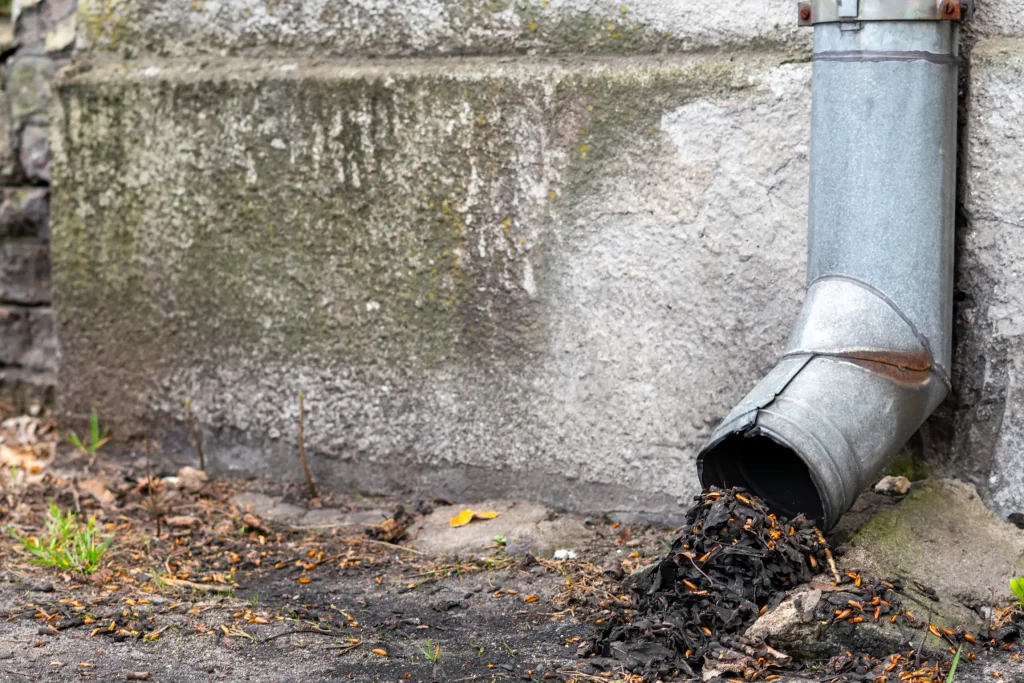
Gutter drain systems fail in stages. It rarely starts with a full blockage. It starts with buildup.
Leaves, dirt, roof debris, and sediment collect inside gutters and downspouts. That material moves into underground lines over time. Water flow slows. Pressure builds. Eventually, the system cannot move water away from your home fast enough.
Here is what that leads to:
- Water backs up into gutters and spills over the edges
- Downspouts clog and trap debris deeper in the system
- Underground pipes fill with sediment and stop draining properly
- Water pools around your foundation instead of moving away
Once water starts collecting near the base of your home, the risk increases fast. Soil expands. Concrete shifts. Small cracks can form and grow. In colder months, trapped water can freeze and create even more pressure inside pipes.
Most homeowners do not notice the early warning signs. By the time water is visible, the problem has already been building for months.
How It Works: Gutters collect roof runoff, downspouts carry it downward, and underground pipes move it away from the foundation. A blockage in any part of this path can restrict the entire system and force water to overflow or pool around the home.
Why Utah Homes Face Unique Drainage Challenges
Underground gutter drain cleaning matters everywhere, but Utah adds a few extra variables that make routine maintenance more important.
Snowmelt Creates a Sudden Water Volume
Utah winters bring snow buildup on roofs and around homes. When temperatures rise, that snow melts quickly. Your drainage system has to handle a large volume of water in a short time. Any blockage will cause immediate overflow.
Dry Debris Builds Up Faster Than You Think
Utah’s dry climate leads to dust, dirt, and organic debris collecting in gutters. Pine needles, leaves, and roof grit settle and compact over time. This material does not always wash away on its own. It creates stubborn clogs.
Freeze and Thaw Cycles Stress Your System and Risk AVS Pipe Damage
Water that sits in pipes can freeze overnight and expand. This puts pressure on joints and connections. Even small clogs increase the chance of trapped water and damage.
Underground Drainage Systems Are Easy to Ignore
Many Utah homes rely on buried downspout extensions. These systems move water away from the foundation. They also collect sediment and debris over time. Without underground downspout cleaning, blockages stay hidden until water has nowhere to go.
Drainage issues in Utah do not just come from one source. They build from seasonal changes, environmental conditions, and lack of routine maintenance.
Who This Affects Most: Utah homes with mature trees, buried downspout lines, or roofs that hold snow longer face a higher risk of hidden debris buildup, trapped water, and seasonal drainage backups.
Signs Your Drains Need Cleaning
Drain problems usually give off signals before they turn into major repairs. The issue is that most of these signs are easy to ignore. Ignoring these signs increases the chance of structural damage and expensive repairs.
Slow Drainage Around Your Home
Water should move quickly through your system. If you notice water lingering in gutters, downspouts, or near your foundation, something is restricting flow.
Overflow During Rain Or Snowmelt
Gutters that spill over the sides during a storm point to a blockage. This often means debris has already moved deeper into the system.
Water Pooling Near The Foundation
Standing water around your home is one of the biggest red flags. It suggests your system is not directing water away properly.
Gurgling Or Strange Drain Noises
Air pockets form when water struggles to move through clogged pipes. That can create bubbling or gurgling sounds in connected drainage lines.
Visible Debris In Gutters And Downspouts
If you can see buildup at the top, there is often more sitting below. What is visible is usually just a small part of the problem.
Red Flag: Water backing up where the downspout enters the ground usually indicates a blockage inside the buried drainage line, not just debris in the gutter. This issue often requires deeper cleaning or professional inspection.
Types Of Drain Cleaning Every Homeowner Should Know
Not all drain cleaning is the same. Different parts of your system require different approaches. Understanding how they work together helps you maintain the entire system, not just one section.
Each part of the system plays a role. Ignoring one section puts stress on the rest. Routine maintenance keeps everything working together.
Gutter Cleaning Utah Homes Rely On
Gutters are the first line of defense. They collect water from your roof and direct it toward downspouts.
When gutters clog, everything downstream suffers. Water spills over the edges instead of flowing where it should. Regular gutter cleaning Utah homeowners schedule keeps debris from entering the rest of the system.
Downspout Drain Cleaning
Downspouts move water from your gutters to the ground or underground piping. They handle a high volume of water, especially during storms and snowmelt.
Clogs in downspouts are common. Leaves and debris get trapped at bends and joints. Routine underground downspout drain cleaning keeps water moving and prevents pressure from building up.
Underground Downspout Cleaning
Many homes have buried drainage lines that carry water away from the foundation. These systems are effective, but they are also easy to overlook.
Over time, sediment, dirt, and organic material settle inside these pipe walls. Without underground downspout cleaning, blockages form out of sight. When they fail, water has nowhere to go.
Underground Drain Pipe Cleaning
Underground systems require a deeper level of maintenance. Professional tools are often needed to clear buildup and restore proper flow.
This is where underground drain pipe cleaning becomes so important. It removes compacted debris that standard cleaning methods cannot reach.
Key Takeaway: Clearing visible gutter debris does not confirm that the entire drainage system is clean. Downspouts and underground pipes should also be checked to confirm water can travel from the roof to the final discharge point.
The Benefits Of Regular Drain Cleaning and Clean Underground Gutter Drains
Routine maintenance does more than keep water moving. It protects your home from problems that build over time.
Each part of the system plays a role. Ignoring one section puts stress on the rest. Routine maintenance keeps everything working together.
Prevents Costly Water Damage
Water damage can spread quickly once it starts. Clean drains reduce the risk of overflow and pooling that leads to interior or structural issues.
Protects Your Foundation
Your drainage system exists to move water away from your home. When it fails, water collects near the base of your property. That puts pressure on your foundation and increases the chance of cracks.
Extends The Life Of Your Drainage System
Debris buildup causes wear on pipes and connections. Regular cleaning reduces stress on the system and helps it last longer.
Reduces The Risk Of Emergency Repairs
Emergency plumbing issues are often preventable. Routine maintenance addresses small problems before they become urgent.
Improves Overall Water Flow
A clean system works efficiently. Water moves where it should without delay or backup. Most homeowners think of drain cleaning as a reactive service. It works best as a proactive one.
Additional Benefits:
- Protects landscaping from runoff and soil erosion
- Reduces standing water that attracts pests
- Keeps walkways safer during freezing weather
- Helps prevent exterior staining and algae growth
- Reveals hidden pipe damage during cleaning

DIY Vs Professional Drain Cleaning
Some maintenance tasks are simple. Others go deeper than they appear.
When DIY Cleaning Makes Sense
Basic upkeep can prevent early buildup. Homeowners can manage surface-level cleaning with the right approach.
Common DIY tasks include:
- Removing leaves and debris from gutters
- Flushing downspouts with a hose
- Checking for visible clogs at entry points
These steps help keep water moving at the top of the system. They do not address deeper issues.
Where DIY Falls Short
Most problems do not sit at the surface. They build inside downspouts and underground lines.
A garden hose cannot clear compacted debris. It cannot reach blockages deep in buried pipes. In some cases, flushing water into a clogged underground gutter drain can make the problem worse by pushing debris further down.
A Quick Comparison of DIY Drain Cleaning vs Professional Drain Cleaning:
| Factor | DIY Drain Cleaning | Professional Drain Cleaning |
| Scope | Surface-level (gutters, visible debris) | Full system (gutters, downspouts, underground pipes) |
| Tools | Basic tools and hose | High-pressure jetting, inspection equipment |
| Effectiveness | Temporary relief | Long-term solution |
| Ability To Clear Deep Clogs | Limited | Strong |
| Time Required | Moderate to high | Minimal for homeowner |
| Risk Of Missed Issues | High | Low |
| Cost | Lower upfront | Higher upfront, lower long-term risk |
Why Professional Cleaning Matters
Professional clogged drain cleaning services go beyond surface-level fixes. They use specialized tools to clear buildup and restore proper flow.
That includes:
- High-pressure water jetting to break up compacted debris
- Inspection tools to locate hidden blockages
- Full-system cleaning that targets gutters, downspouts, and underground lines
This is where many Utah homeowners see the biggest difference. A full cleaning clears the system from top to bottom, not just the visible sections.
Before You Decide: Choose the right approach based on:
- Whether the blockage is visible and easy to reach
- Whether water reaches the underground drain outlet
- How often the same clog returns
- Whether pipes show signs of cracks or separation
- Whether water is pooling near the foundation
Recurring clogs, hidden blockages, or damaged pipes usually require professional attention.
How Often Utah Homeowners Should Clean Their Drains
Drain cleaning is not a one-time task. It should follow a consistent schedule based on local conditions.
Twice Per Year Is A Strong Baseline
Most homes benefit from cleaning in:
- Spring, after snowmelt and early debris buildup
- Fall, after leaves and seasonal debris collect
This timing helps prepare your system for heavy water flow periods.
Homes With Trees May Need More Frequent Cleaning
Properties with heavy tree coverage collect debris faster. Pine needles, leaves, and small branches can clog systems quickly. These homes may need cleaning three or more times per year.
Underground Systems Require Periodic Attention
Buried drainage lines do not need constant service, but they should not be ignored. Scheduling underground downspout cleaning every 1 to 2 years helps prevent long-term buildup.
Watch For Warning Signs Between Cleanings to Avoid Clogged Underground Drains
Even with a schedule, conditions can change. Sudden clogs or slow drainage may require additional service.
A consistent routine reduces risk. It also spreads out maintenance costs instead of leaving everything to one large repair. If your system has not been cleaned recently, it is worth taking action now. Routine downspout drain cleaning helps prevent the problems that cost the most to fix.
For homeowners looking to stay ahead of drainage issues, scheduling a professional service is one of the simplest ways to protect your home year-round.
Tip: Track the following after each cleaning:
- Date the system was cleaned
- Type and amount of debris removed
- Downspouts with recurring blockages
- Condition of underground drain outlets
- Repairs or damaged sections identified
Stay Ahead Of Drainage Problems
Drain issues rarely start with a major failure. They build slowly, then show up all at once.
Utah homeowners deal with a mix of challenges. Ignoring routine maintenance allows small blockages to grow into larger problems. Water ends up where it should not be. Repairs become more expensive. Damage spreads further than expected.
Regular downspout drain cleaning keeps your system working the way it should. It helps move water away from your home, protects your foundation, and reduces the risk of emergency repairs. It also gives you a clear view of your system’s condition before something goes wrong.
If it has been a while since your last cleaning, now is a good time to act. Scheduling a professional service is a simple step that can prevent bigger issues down the line.
Learn more about downspout drain cleaning and how it can protect your home. Book a call today!
Frequently Asked Questions
How Often Should Drains Be Cleaned In Utah?
Most homes benefit from drain cleaning twice per year, typically in the spring and fall. Homes with heavy tree coverage or frequent debris buildup may need more frequent service. Underground systems should be cleaned periodically to prevent hidden clogs.
What Is The Difference Between Gutter Cleaning And Downspout Drain Cleaning?
Gutter cleaning focuses on removing debris from the roofline collection system. Downspout drain cleaning goes further by clearing the vertical pipes and any connected underground lines that move water away from your home.
Can Clogged Drains Cause Foundation Damage?
Yes. When water cannot drain properly, it pools around the base of your home. Over time, that moisture can weaken soil, create pressure against foundation walls, and lead to cracks or shifting.
Are Professional Drain Cleaning Services Worth It?
Professional services address the full drainage system, including areas that are not visible or accessible with basic tools. This reduces the risk of recurring clogs and helps prevent larger, more expensive issues.
What Are The Signs Of A Clogged Drain System?
Common signs include slow drainage, overflowing gutters, water pooling near the foundation, and visible debris buildup. Strange sounds like gurgling can also indicate restricted water flow within the system.
Share
Recent Posts

October 7, 2026
The Crucial Role of Gutter Downspouts in Protecting Your Home
Every drop of rain that lands on your roof has somewhere to go, and your gutters and downspouts determine where it ends up....

September 23, 2026
How Utah’s Spring Snowmelt Overwhelms Underground Gutter Drains
If your gutters and downspouts look perfectly clear, you might assume your drainage system is ready for spring. However, what if the real...
September 15, 2026
Hydro Jetting vs. Snaking for Underground Downspouts: Which Is Better?
A drain snake may break through a blockage, while high-pressure jetting can scour the inside of the pipe. But which method is better...