
Drain Jetting and Snaking
TL;DR:
- The debate between hydro jetting vs. snaking depends on the type and severity of the underground downspout blockage.
- Snaking can clear simple clogs, while hydro jet drain cleaning and downspout drain jetting can remove roots, mud, silt, leaves, and buildup from more of the pipe interior.
- A professional inspection can identify whether the buried line needs cleaning or has damage requiring repair, especially when clogs keep returning.
A drain snake may break through a blockage, while high-pressure jetting can scour the inside of the pipe. But which method is better suited to the problem buried beneath your property?
Well, the answer depends on what is blocking the line, how severe the buildup is, and the condition of the pipe itself.
Slow-moving water from a gutter can signal trouble in the buried drainage line rather than the gutter itself. As rainwater runs off Utah roofs, underground downspout pipes move it away from the foundation and into a suitable drainage area. When those lines become blocked, drain jetting and snaking are two common ways to clear them.
While both can restore flow, each method tackles a clog differently.
Utah’s sudden rain events can put added pressure on underground drainage systems. In August 2025, heavy rainfall flooded parts of northern Utah, with some areas of Weber County receiving up to 3 inches of rain. When a large volume of water reaches a partially blocked line in a short period, restricted drainage can quickly become a bigger problem.
This is why identifying the type of blockage and the condition of the pipe is important. It can help determine which cleaning method makes sense. A drain snake can break through a straightforward obstruction, while high-pressure water can wash away roots, mud, silt, and compacted debris from the inside of the line. Accessibility also matters, particularly when the affected section is buried deep underground.
This guide compares both methods, including how they work, when each makes sense, typical costs, and the signs that can help determine which option a property may need.
What Is Snaking for an Underground Downspout?
Snaking uses a long flexible cable with a cutting or grabbing head to reach an obstruction inside the drain. The cable is pushed through the pipe and rotated to break apart or move the material blocking water flow.
For a straightforward blockage, this can reopen the passage and get water moving again. It can be useful when the obstruction is relatively small, accessible, and concentrated in one section of the line.
The limitation is what remains inside the pipe. Snaking may create a path through the blockage without removing all the mud, silt, root material, or other buildup coating the surrounding pipe walls.
At a Glance: Snaking focuses on opening the blocked section. It can restore flow without necessarily giving the entire underground line a thorough cleaning.
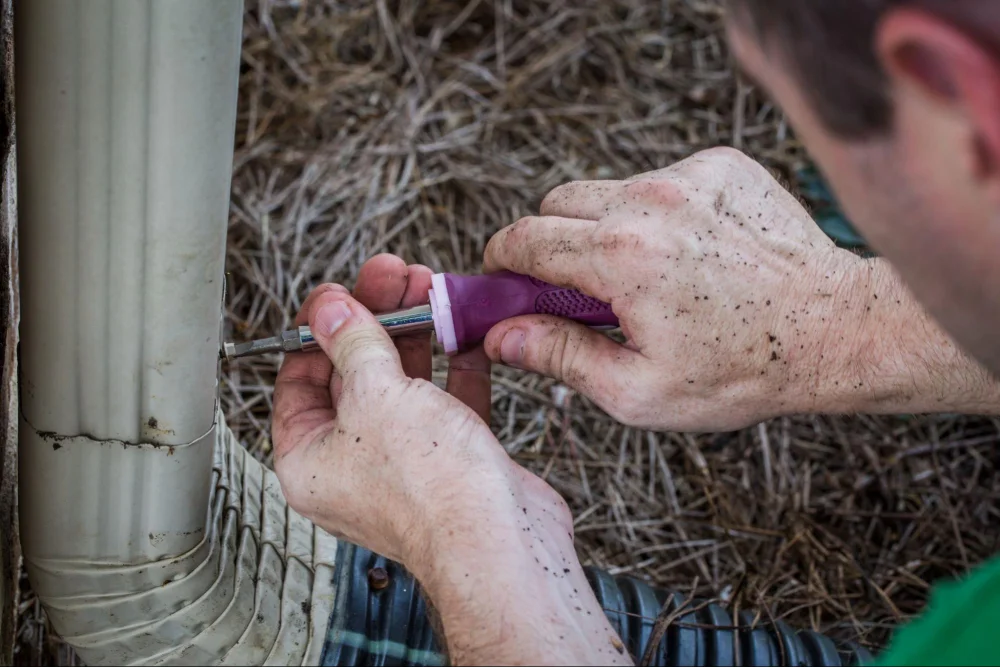
What Is Hydro Jetting for Underground Downspouts?
Hydro jetting drain cleaning uses specialized equipment to send high-pressure water through an underground drain. A nozzle directs water forward to break apart obstructions while additional jets help scour buildup from the inside of the pipe.
For an underground gutter drain, that can mean removing accumulated mud, leaves, silt, root material, and other debris rather than simply creating a narrow channel through it.
That broader cleaning action is one of the main benefits of hydro jetting. When an underground line has been collecting material for years, opening one small passage may leave enough residue behind for another blockage to form.
How Downspout Drain Jetting Works
A typical drain jetting service follows several steps:
- Inspect the drain: The technician examines the underground line to identify the blockage and assess the pipe’s condition.
- Find an access point: A suitable entry point is located so the jetting hose can reach the affected section of the line.
- Clear the blockage: High-pressure water breaks apart compacted debris, roots, mud, and other material restricting the pipe.
- Flush the line: The loosened buildup is pushed through and removed from the drainage system.
- Test the flow: The technician checks the line again to confirm that water is draining freely and the blockage has been cleared.
Why the Cleaning Method Matters:
- Heavy buildup can cling to the inside of a buried pipe, so opening a narrow passage may leave debris behind and allow the blockage to return.
- Roots, mud, silt, and other material can continue restricting water flow if they are only partially cleared from the line.
- Thorough cleaning removes more of the buildup from inside the pipe, helping the underground drain handle regular runoff and heavier rainfall more effectively.
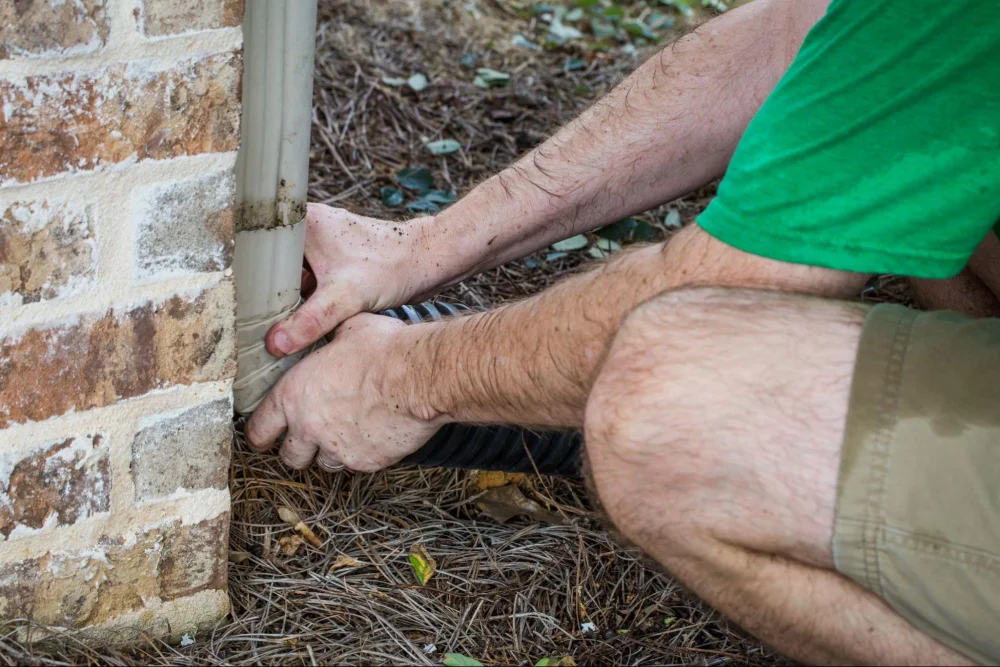
Hydro Jetting vs. Snaking: What’s the Difference?
Both methods can address blocked drains, but they work in different ways. Here is a table that clarifies the debate of hydro jetting vs. snaking:
| Factors | Snaking | Hydro Jetting |
| Primary action | Breaks through or moves the blockage | Breaks apart and flushes debris |
| Pipe-wall cleaning | Limited | More thorough |
| Root material | Can cut through roots | Can break up and flush root material |
| Mud and silt | May leave buildup behind | Well suited to flushing buildup |
| Recurring clogs | May provide temporary relief | Better suited to buildup-related problems |
| Best use | Simple, localized blockage | Stubborn or recurring underground buildup |
| Pipe condition | Depends on the situation | Inspection helps determine suitability |
When Is Snaking a Better Choice?
Here are the situations where snaking may be the better choice:
Simple, Localized Blockages
If one underground downspout has a relatively straightforward obstruction and the rest of the system appears to drain normally, snaking may be a practical option. It can clear the immediate blockage without using more intensive equipment than the situation calls for.
Accessible or Short Drain Lines
A line with a convenient access point and a blockage close to that point may be easier to clear mechanically. The specific layout of the underground extension matters when selecting a cleaning method.
When the Pipe Needs Further Evaluation
A blockage does not always mean the pipe itself is healthy. Cracks, separated joints, collapsed sections, or severe misalignment can restrict water flow even after debris has been removed. Snaking will not repair those conditions.
Quick Check: If the same underground drain keeps backing up after being cleared, look beyond the immediate blockage. Repeated problems can point to buildup, root intrusion, or a pipe condition that needs attention.

When Is Hydro Jetting Better?
Here are the situations where hydro drain jetting may be the better choice:
Recurring Underground Drain Clogs
A recurring clogged underground gutter drain can indicate that material is continuing to accumulate inside the pipe. If a basic clearing restores flow temporarily and the same problem returns, a more thorough cleaning may make sense.
Roots Inside the Downspout Drain
Roots can enter underground lines through joints, cracks, or other openings. Once inside, they can trap additional dirt and debris around the root growth. Hydro jetting drain cleaning can break apart and flush much of this material from the line.
However, jetting does not repair the opening that allowed roots to enter. If the pipe is cracked or separated, repair may be needed after cleaning.
Mud, Silt, and Heavy Debris
Underground downspout extensions can collect fine soil and sediment over time, while heavy rain may carry additional debris into the drainage system. Thorough flushing becomes especially useful when this buildup has significantly reduced the pipe’s capacity.
The impact becomes more noticeable during periods of intense rainfall, when a restricted line has to handle a sudden surge of runoff. NOAA reported 1,434 flash flood warnings across the U.S. in July 2025, the second-highest July total in 40 years. While the figure covers the entire country, it illustrates how periods of intense rainfall can quickly increase the amount of water entering drainage systems. For Utah properties, a downspout line with existing sediment or debris has less room to handle that sudden increase in flow.
Long or Difficult-to-Reach Drain Lines
Some underground downspouts extend a considerable distance from the home before reaching their outlet. When the obstruction is buried far from the downspout, downspout drain jetting can provide a way to work through and flush the line without immediately excavating the yard.
Multi-Unit and Older Properties
Older multi-unit properties can have several underground downspout lines with similar landscaping, pipe layouts, and drainage patterns. If one line has accumulated years of debris, other lines may have similar problems.
Checking the drainage system as a whole can help identify recurring issues before several downspouts begin backing up during the same storm.
Hydro Jetting vs. Snaking Cost: What Should Homeowners Consider?
Drain cleaning costs can vary significantly depending on the type and location of the blockage. A straightforward obstruction that can be reached easily may require less time and equipment, while underground lines with heavy buildup, root intrusion, limited access, or recurring blockages may require more extensive work.
The cleaning method also affects the overall cost, since snaking and hydro jetting involve different equipment and levels of labor.
For homeowners comparing drain jetting and snaking, it makes more sense to compare the scope of work than the service name alone. The condition of the line, accessibility, severity of the blockage, and equipment required can all affect the final cost.
Snaking usually costs less upfront because it uses simpler equipment and targets a specific blockage. On the other hand, drain jetting can cost more because it uses high-pressure water to clean a larger section of the pipe.
Price can also vary based on:
- Access to the underground line
- Severity of the blockage and pipe condition
- Number of drains being cleaned
Some local jobs may start around $250 for the first drain and $100 for each additional drain, with heavily blocked or difficult-to-access lines costing more.
Cost Consideration: Compare what the service is actually doing, not just the initial price. A method that only opens the blockage may have a different value from one that flushes buildup throughout the line.
Why Thorough Underground Downspout Cleaning Matters
An underground downspout has one basic job: carrying roof runoff away from the property. A restriction somewhere along that buried route can interrupt the entire system.
That can lead to:
- Water pooling near the foundation: Blocked runoff may collect close to the home instead of reaching its intended outlet.
- Landscape erosion: Repeated overflow can wash away soil around lawns, beds, and walkways.
- Downspout backups: Water may spill from the bottom of the downspout when the underground extension cannot accept more flow.
- Recurring drainage problems: Remaining debris can become the starting point for another blockage.
- Hidden pipe issues: Cleaning can reveal problems such as damaged sections, missing caps, or disconnected extensions.
Key Takeaway: A downspout system only works as well as the buried line carrying water away. Keeping that route open helps prevent runoff from being redirected toward the property.
How to Tell Which Method Your Downspout Needs
There is no single answer for every underground drain. The symptoms can help point toward the right next step.
Choose Snaking When:
- The blockage appears simple and localized
- The affected section is accessible
- There is little evidence of widespread buildup
- The goal is to reopen a blocked passage
Consider Hydro Jetting When:
- The same underground drain keeps backing up
- Roots are suspected inside the line
- Mud and silt have accumulated
- Water remains slow after basic clearing
- The buried line needs a more thorough flush
- Several underground drains show similar symptoms
Call for an Inspection When:
- Water pools near the foundation
- No water exits the buried drain during rainfall
- The line may be cracked, collapsed, or disconnected
- The blockage repeatedly returns
Get Your Underground Downspouts Flowing Again
Underground drainage problems can be hard to spot. A downspout may look normal while mud, roots, leaves, or sediment restrict the buried line.
That is where Utah Downspout Cleaning can help. Since 1998, we have focused on underground gutter drainage, using professional equipment to clear buried downspout lines and spot issues such as hidden drain caps or disconnected extensions.
If you notice slow drainage, pooling water, or a downspout backing up during rain, schedule a free bid to have the line evaluated.
Frequently Asked Questions
1. Is hydro jetting better than snaking for underground downspouts?
It depends on the blockage. Snaking can work well for a simple, localized obstruction. Hydro jetting is generally better suited to recurring clogs, root growth, mud, silt, and heavier buildup because it can flush loosened material through the line.
2. Can snaking clear a clogged underground gutter drain?
Yes. A drain snake can break through certain underground blockages and restore water flow. It may be less effective when the pipe contains extensive buildup, root growth, or large amounts of sediment throughout the line.
3. What does hydro jetting drain cleaning remove from a downspout?
Depending on the blockage, hydro jetting drain cleaning can remove materials such as mud, silt, leaves, root material, and other debris. The high-pressure water also helps clean buildup from the interior of the buried line.
4. Can hydro jetting remove roots from an underground downspout?
Hydro jetting can break apart and flush root material from inside a drainage pipe. If roots entered through a crack, open joint, or damaged section, cleaning alone will not correct that underlying pipe problem.
5. Is hydro jet drain cleaning safe for older underground pipes?
The condition and material of the pipe matter. A professional should evaluate the line before applying high-pressure water, particularly when an older pipe may have cracks, severe deterioration, or structural damage.
6. How do I know if my underground downspout needs cleaning or repair?
Recurring backups, slow drainage, standing water, and missing water at the drain outlet can point to a blockage. If the line remains problematic after cleaning, or if a damaged section is suspected, a closer inspection can help determine whether repair is needed.
Share
Recent Posts

September 23, 2026
How Utah’s Spring Snowmelt Overwhelms Underground Gutter Drains
If your gutters and downspouts look perfectly clear, you might assume your drainage system is ready for spring. However, what if the real...
September 15, 2026
Hydro Jetting vs. Snaking for Underground Downspouts: Which Is Better?
A drain snake may break through a blockage, while high-pressure jetting can scour the inside of the pipe. But which method is better...

September 10, 2026
How to Remove Roots From an Underground Downspout?
It’s a rainy afternoon, and you notice water gathering around the downspout instead of flowing away from the house. Within minutes, the gutter...