
Clogged Underground Downspout
TL;DR: An underground downspout blockage can cause foundation pooling, slow drainage, soggy lawns, and other warning signs. Early detection helps prevent larger drainage issues.
Most homeowners would rather deal with a drainage issue while it is still manageable than discover it after water has already reached the wrong place. The challenge is knowing when a small change deserves your attention.
A soggy lawn, slow drainage, or water collecting near a downspout may not seem urgent on its own, but repeated problems can point to something happening underground.
So, the question is: what should you look for?
Keep reading to discover 7 signs of an underground downspout blockage, what they can indicate, and when you should have your system checked.
1. Water Pooling Near the Foundation
One of the most obvious downspout blockage signs is water collecting near the base of the house after a rainstorm. If the underground pipe is clogged, water has nowhere to go once it reaches the blockage, so it backs up and resurfaces near the downspout’s entry point instead of exiting safely away from the home.
This pooling is more than a cosmetic issue. Water that repeatedly sits against the foundation can seep into cracks, saturate the surrounding soil, and contribute to moisture or foundation problems over time.
If puddles keep forming in the same spot after every rain, it’s worth investigating what’s happening underground rather than simply hoping the water evaporates on its own.
Next Step: Check your downspout flow, clear visible debris, and flush the underground line if water continues backing up near the foundation.
2. Overflowing Gutters During Rainfall
If your gutters overflow even after a recent cleaning, the issue may be farther down the drainage system. When water cannot move freely through the underground line, it can back up toward the downspout and spill over the gutter during heavier rainfall.
With a clogged underground downspout, you may notice the overflow happens more often during heavy storms when the system has to handle a larger volume of water. NOAA’s 2025 climate review documented widespread flooding and several historic precipitation events that overwhelmed infrastructure across parts of the U.S.
Watch for other changes around the downspout too, such as unusually wet soil or water lingering in the yard. These clues can help you determine whether the problem extends beyond your gutters.
Watch Out: Do not assume overflowing gutters always mean the gutters need another cleaning. A blocked underground downspout can prevent water from leaving your home even when the gutters look clear.
3. Soggy or Sinking Lawn Areas
Your lawn may be the first place to show that something is wrong underground. If one area stays wet, feels soft underfoot, or starts to sink, check whether it sits along the path of your underground downspout. Water that cannot move through the pipe properly may be escaping into the surrounding soil instead.
Over time, that constant moisture can weaken and wash away the soil, leaving low spots or uneven ground behind. You may also notice grass growing thicker or greener in the same area. When these changes keep appearing after rain, they are worth paying attention to rather than treating them as a simple lawn issue.
Signs To Watch For: Look for soft ground, unusually green grass, sinking spots, or standing water that appears along the underground pipe route after rainfall.
4. Slow-Draining or Standing Water at the Discharge Point
The discharge point is one of the easiest places to check when you suspect a problem with your underground downspout.
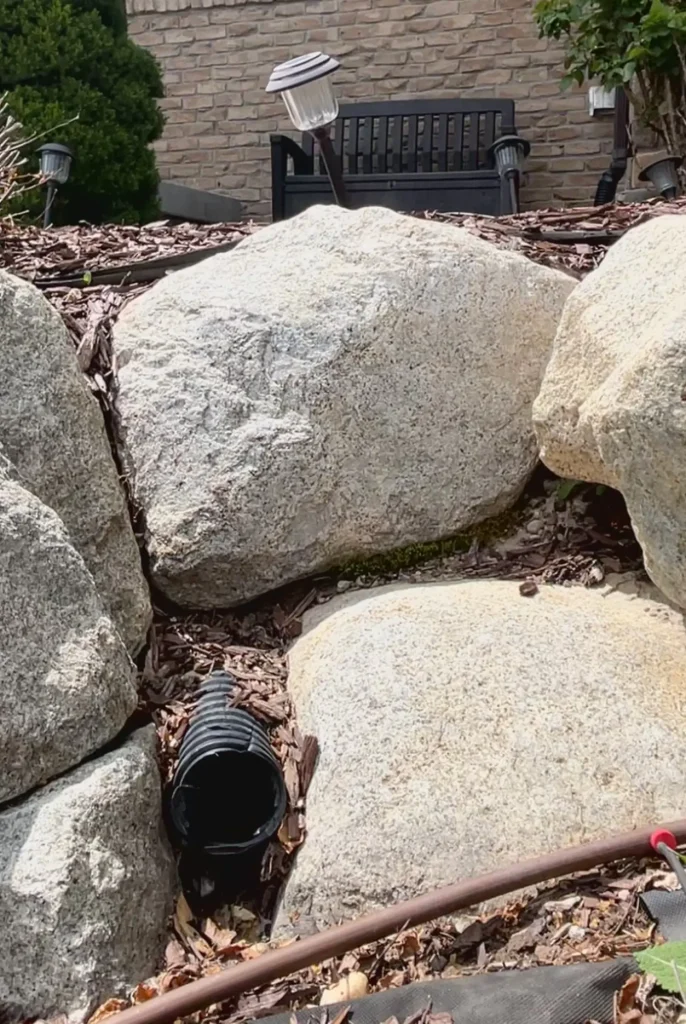
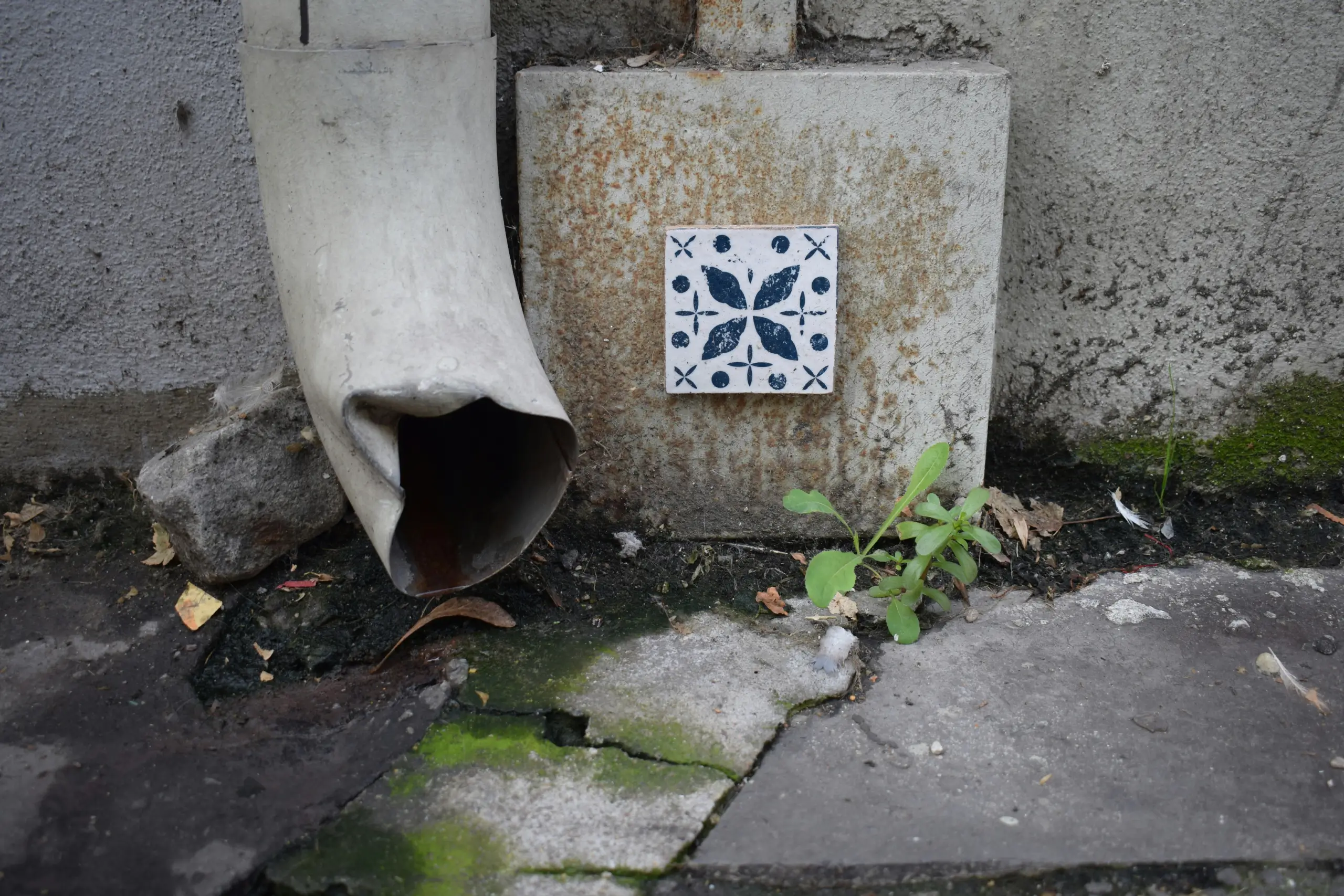
During and after rainfall, water should exit freely and move away from your home. If the flow becomes weak, stops completely, or starts pooling around the outlet, something may be restricting the line.
The difference between light and heavy rain can also tell you more. A system that drains normally during a light shower but struggles during a downpour may have a partial blockage. As more water enters the pipe, the restriction becomes harder to overcome, causing the outlet to back up.
What To Do: Remove debris around the outlet and test the line during light water flow. If drainage remains slow, the pipe may need flushing or professional cleaning.
5. Musty Odors or Mold Near the Foundation
Not every sign of a drainage problem appears outside. When a clogged underground downspout leaves water sitting near your foundation, that moisture can eventually find its way into the basement or crawlspace. Once the area stays damp, it creates an environment for mold and mildew to develop.
In fact, the EPA notes that mold can grow when moisture is present and recommends drying wet or damp materials within 24 to 48 hours whenever possible.
A musty smell, damp walls, or recurring mold in the same basement area can be a clue that more than indoor humidity is at play. If cleaning the affected area only provides a temporary fix, look at what is happening outside as well.
Poor drainage can keep moisture against the foundation, giving it more opportunities to seep indoors and create ongoing problems.
Recommended Action: Dry and clean the affected indoor area, then check whether rainwater is collecting outside the same section of the foundation. Correcting the exterior drainage source can help prevent the moisture from returning.
6. Cracks in the Foundation or Basement Leaks
When a blockage goes unnoticed for an extended period, the consequences can escalate from minor annoyance to structural concern.
Repeated soil saturation around a foundation can contribute to soil movement and place additional pressure on foundation walls. New cracks, especially ones that appear after a period of heavy rain, deserve a closer look.
Basement leaks that show up specifically during or after storms often trace back to exterior water management problems rather than the foundation itself. Addressing the underground downspout blockage at the source is usually far less costly than repairing the structural damage it can eventually cause.
Action To Take: Have the underground downspout inspected and clear any blockage so rainwater can move safely away from your home. If cracks are growing, leaking, or showing signs of movement, ask a foundation professional to assess them.

7. Gurgling Sounds or Backup During Heavy Rain
You may not always see a drainage problem right away, but you might hear one. A downspout that suddenly gurgles, bubbles, or makes unusual rushing sounds during rainfall could be struggling to move water through the buried pipe. The change is often more noticeable when a storm sends a large amount of water into the system at once.
Take note if the sound keeps coming back or whether water starts sitting around the outlet afterward. While one noisy storm may not tell you much, a recurring pattern can point to an issue that deserves a closer look.
When To Get It Checked: If gurgling or backup happens during multiple storms, have the underground line checked for a partial blockage. Clearing the restriction early can restore proper flow before the pipe backs up completely.
What Typically Causes These Blockages
Underground downspout blockages rarely happen without a reason. Most develop gradually as material enters the system or the buried pipe begins to deteriorate. Common causes include:
- Leaves and gutter debris can wash into the underground line during heavy rain and collect inside the pipe.
- Dirt and sediment may settle at low points, leaving less room for water to pass through.
- Tree roots work their way into small cracks or loose joints as they seek out moisture.
- Cracks, shifting, or collapsed sections might disrupt the pipe and prevent water from reaching the discharge point.
How To Reduce Blockages:
- Clean gutters and downspouts regularly.
- Use gutter guards to reduce debris.
- Keep discharge points clear.
- Check for sinking ground or excess moisture.
- Inspect recurring blockages for pipe damage or roots.
Catch It Before It Backs Up
An underground drainage problem can start with something easy to overlook, such as a slow discharge, soggy patch of grass, or unusual sound during a storm.
The longer water struggles to move away from your home, the more opportunities it has to affect your yard, foundation, or basement. Paying attention to these warning signs gives you a better chance of addressing the issue before it turns into a much bigger repair.
When you need help getting ahead of these problems, Utah Downspout Cleaning focuses on the parts of your system you cannot easily see or reach. Our team can help identify underground blockages, clear your downspouts, and keep rainwater moving away from your home as it should.
Instead of waiting for the next heavy storm to reveal a problem, take action now and give your drainage system the attention it needs. Sign up with Utah Downspout Cleaning today.
Frequently Asked Questions
1. How do I know if my underground downspout is clogged?
Look for water pooling, overflowing gutters, soggy ground, weak outlet flow, or gurgling sounds. Recurring signs after rain often indicate a blockage.
2. Why does my downspout back up during heavy rain?
A partial blockage may drain during light rain but struggle with higher water volume. Leaves, sediment, roots, or pipe damage may be restricting the flow.
3. How can I clear a clogged underground downspout?
Remove visible debris and try flushing the line with water. If the backup continues, schedule professional cleaning or an inspection.
4. Can a clogged downspout damage my foundation?
Yes, because the blockage can cause water to collect near your foundation. Continued moisture may contribute to basement leaks, soil movement, or foundation problems.
5. How often should underground downspouts be checked?
Check them during regular gutter maintenance and after major storms. You should also inspect them whenever you notice slow drainage, pooling, or recurring backups.
Share
Recent Posts

October 7, 2026
The Crucial Role of Gutter Downspouts in Protecting Your Home
Every drop of rain that lands on your roof has somewhere to go, and your gutters and downspouts determine where it ends up....

September 23, 2026
How Utah’s Spring Snowmelt Overwhelms Underground Gutter Drains
If your gutters and downspouts look perfectly clear, you might assume your drainage system is ready for spring. However, what if the real...
September 15, 2026
Hydro Jetting vs. Snaking for Underground Downspouts: Which Is Better?
A drain snake may break through a blockage, while high-pressure jetting can scour the inside of the pipe. But which method is better...