
Hydro Jet Drain Cleaning
TL;DR:
- Hydro jetting uses high-pressure water to clear debris, silt, and roots while cleaning the pipe walls
- A camera inspection helps locate the clog and confirm whether the pipe is suitable for jetting
- Unlike snaking, hydro jetting cleans the full pipe rather than opening a narrow path through the blockage
When rain pours down, your gutters and downspouts have one important job: move water away from your home before it can collect where it should not. But that system can quickly struggle when an underground downspout drain becomes packed with dirt, leaves, roots, or other debris.
The concern is worth taking seriously, especially as heavy weather continues to create drainage challenges. In 2025, the U.S. experienced 23 billion-dollar weather and climate disasters, making reliable water management an important part of protecting your property.
If water backs up rather than flowing freely, hydro jet drain cleaning can be a powerful way to clear the blockage.
But how does the process work when the clog is buried underground?
This guide will explain exactly that, alongside what causes it, how it compares with traditional methods, and when to reach out to an expert.
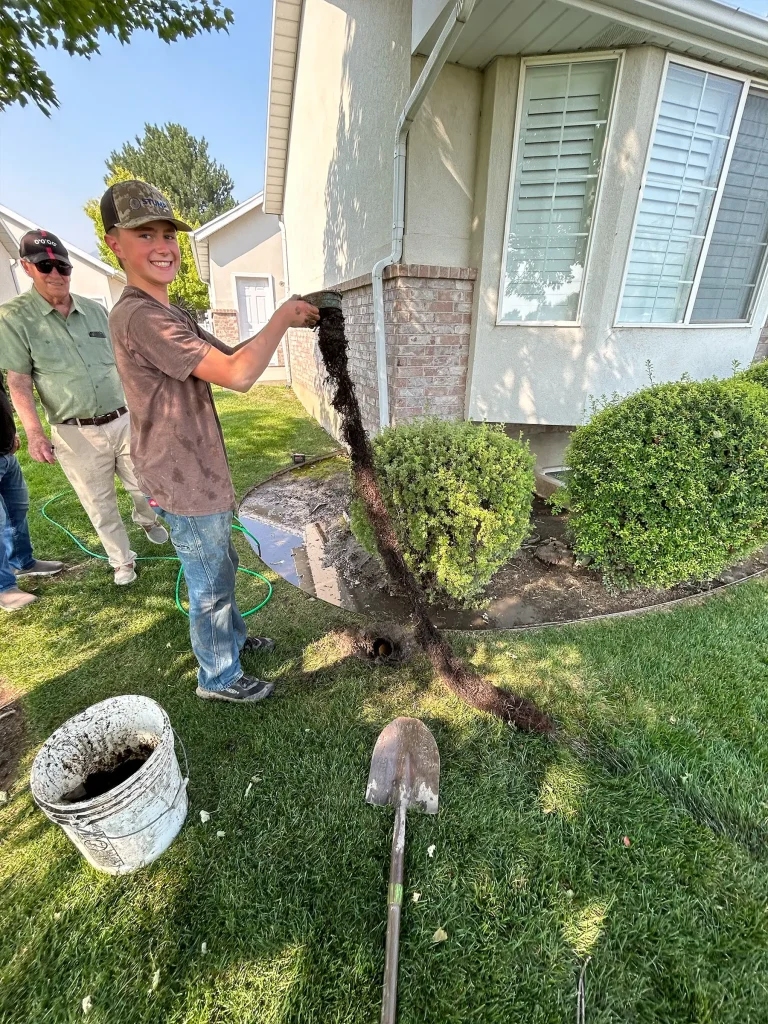
What Is Hydro Jet Drain Cleaning?
Hydro jet drain cleaning uses a specialized hose fitted with a high-pressure nozzle to blast water through a pipe at forces typically ranging from 1,500 to 4,000 PSI, depending on the pipe material and clog severity.
The nozzle sprays water forward to cut through blockages and backward to scour the pipe walls as the hose is pulled through.
That second part matters.
Older methods, like snaking or rodding, simply punch a hole through whatever is blocking the line. Hydro jet drain cleaning does something different.
It strips debris, grease, roots, and silt from the entire interior surface of the pipe. The result is a line that’s actually clean, not just temporarily passable.
At a Glance: Hydro jetting does more than open a narrow path through a clog. Its nozzle breaks through the obstruction while rear-facing water jets scrub buildup from the pipe walls and help carry loosened debris toward the exit.
Common Downspout Drainage Problems That Lead to Clogs
Underground downspout lines rarely clog overnight. The blockage usually builds gradually, season after season, until the pipe can no longer keep up with a heavy rainstorm.
Understanding what’s actually causing the buildup makes it easier to catch downspout drainage problems before they turn into standing water or foundation trouble.
Leaves and Seed Debris
Even homes with gutter guards aren’t fully protected. Fine debris like seed pods, pine needles, and small leaf fragments slip past most screens and wash directly into the underground line during heavy rain. Over time, this organic material mats together and narrows the pipe’s interior diameter.
Silt and Dirt Buildup
Every rainstorm carries a small amount of dirt and grit off the roof and through the gutter system. On its own, one storm’s worth of silt is negligible, but years of accumulation compact into a dense layer along the bottom of the pipe, gradually reducing flow capacity until the line backs up.
Root Intrusion
Trees and shrubs planted near a downspout line are naturally drawn to the moisture inside it. Roots find their way into joints and small cracks, then expand once inside, restricting flow and sometimes fracturing the pipe outright.
This is one of the more stubborn causes of downspout drainage problems, since roots tend to return if not fully removed.
Pipe Bellies and Misalignment
Soil settling, freeze-thaw cycles, and age can cause a section of buried pipe to sag or shift out of alignment. These low spots, known as bellies, trap standing water and debris instead of letting it flow through, creating a chronic clog point even in an otherwise healthy line.
Collapsed or Crushed Sections
Years of soil pressure, heavy vehicle traffic, or nearby construction can weaken and crush an underground pipe. Even a partially collapsed section can restrict water flow and create a low spot where dirt, leaves, and other debris collect. With time, the buildup can block the line and turn a minor drainage issue into a major one.
Why Downspout Problems Keep Returning:
- Fine debris continues passing through gutter guards
- Dirt and silt settle inside low sections of the pipe
- Roots regrow through unresolved cracks or open joints
- Pipe bellies repeatedly collect standing water and debris
- Crushed or misaligned sections continue restricting water flow

Signs You’re Dealing With a Clog
A few telltale signs can reveal that your underground downspout drain is starting to struggle. Recognizing them gives you a better idea of what is happening below the surface and whether professional cleaning may be needed.
Water Backing Up at the Base
If water starts pooling or spilling out around the downspout’s connection point during rain instead of flowing into the underground line, that’s usually one of the clear signs of a blockage somewhere downstream.
Pooling or Soggy Patches in the Yard
Standing water or unusually soft, saturated ground along the path of the buried line often signals that water is escaping through a crack or simply has nowhere left to go because the pipe is blocked.
Slow or Absent Drainage During Rain
A healthy line should drain steadily throughout a storm. If water drains slowly, comes to a stop, or fails to carry water away even during a heavy downpour, it’s a strong indicator that debris has significantly narrowed or blocked the pipe.
Gurgling Sounds From the Pipe
A gurgling or bubbling noise coming from the downspout or nearby cleanout usually means air is trapped behind a partial blockage. These sounds can become more noticeable during or shortly after rainfall as water passes through the affected section of the drainage system.
Catching any one of these signs early is reason enough to have the line inspected, since clogged drain cleaning at this stage is a far smaller job than the foundation repair that can follow if the clog is left alone.
What to Note Before an Inspection:
- Which downspout is backing up or draining slowly
- When the problem appears during rainfall
- Where pooling or soggy ground develops
- Whether gurgling occurs before, during, or after rain
- How frequently the same symptoms return
How Does Hydro Jetting Clear the Clog?
Clearing an underground downspout line isn’t a single blast of water and done. It’s a methodical process, and that’s exactly why it holds up so well on lines that are buried, bent, and hard to reach.
Step 1: Camera Inspection
The process starts with a camera inspection to see inside the underground line. The camera helps locate the clog, check for root intrusion, and assess the pipe’s condition, allowing the technician to determine whether jetting is the right approach.
Step 2: Hose Insertion
Once the clog and pipe condition are confirmed, the jetting hose feeds into the underground line from an accessible entry point, such as the downspout base or a nearby cleanout, working toward the blockage.
Step 3: High-Pressure Flushing
Water blasts forward through the clog at high pressure, breaking apart compacted silt, shredding root masses, and pushing loosened debris toward an exit point rather than just displacing it further down the line.
Step 4: Full-Pipe Scouring
The final pass focuses on the entire inside of the pipe, not just the original blockage. As the hose retracts, the backward-facing jets loosen and flush away residue along the pipe walls for a more complete clean.
This full-pipe approach is what sets hydro jet drain cleaning apart from a standard auger. It reaches bends, long buried runs, and tight joints that a cable or snake simply can’t clean thoroughly, giving the line a much longer stretch before the next clog forms.
Why Technique Matters: Effective hydro jetting depends on controlled hose movement as much as water pressure. Moving too quickly may leave residue behind, while a measured withdrawal helps clean the pipe walls more thoroughly.

Hydro Jetting vs. Traditional Drain Cleaning Methods
Not sure whether hydro jetting or a traditional snake and auger is the better choice? A closer comparison can help you understand what each method offers.
| Factor | Hydro Jetting | Snaking / Augering |
| Cleaning scope | Cleans across the full width of the pipe | Narrow channel through the clog |
| Root removal | Shreds and flushes roots out | Cuts a path but leaves root mass behind |
| Yard disruption | Minimal to none in most cases | Minimal, but less effective long-term |
| Repeat clogs | Less frequent due to thorough cleaning | More frequent, since debris remains on walls |
| Best suited for | Silt, grease, roots, long-term buildup | Simple, isolated blockages |
For a one-time, easy-to-reach obstruction, a basic snake might do the job. But for the kind of accumulated buildup that develops in buried downspout lines over years, a proper drain cleaning service using jetting equipment delivers results that actually last.
Why Keeping These Drains Clear Matters
A clear underground drainage system isn’t just about avoiding a soggy yard. More than 80% of foundation problems are directly tied to water and drainage issues, which puts this maintenance task closer to structural protection than routine upkeep.
Staying ahead of clogs helps you:
- Prevent foundation seepage: Water that can’t drain away can pool near the foundation and seep into basements and crawl spaces.
- Protect landscaping and hardscaping: Standing or redirected water erodes soil beneath walkways, patios, and garden beds over time.
- Reduce pressure on aging pipes: Blocked lines build up pressure behind the clog, which can crack or collapse sections that are already weakened.
- Extend the system’s lifespan: Regular cleaning keeps the entire drainage system working as designed instead of straining individual sections.
- Avoid costlier repairs later: Catching a clog early is far less expensive than the excavation or foundation work needed once water damage sets in.
Key Takeaway: An underground downspout drain protects the property only when the entire route remains open. Clearing the pipe allows roof runoff to reach its intended outlet instead of escaping or backing up near vulnerable areas.
Get Your Downspout Drains Flowing Again
The hardest drainage problems to catch are often the ones you cannot see. An underground downspout may continue to look perfectly normal while debris builds inside the pipe and gradually limits how much water it can carry. Once the warning signs become obvious, the line may already need more than a basic clearing.
That is why Utah Downspout Cleaning takes a closer look before cleaning the line.
With camera inspection and hydro jet drain cleaning, our team can locate problem areas, remove stubborn buildup, and assess whether the pipe itself has an underlying issue. You basically get a clear picture of your drainage system instead of relying on guesswork.
Notice pooling, slow drainage, or water backing up around your downspouts? Contact Utah Downspout Cleaning today and take care of the problem.
Frequently Asked Questions
1. Is hydro jetting safe for underground downspout drains?
Hydro jetting can be safe when the pipe is structurally sound and the pressure is matched to its material and condition. A camera inspection should come first to identify cracks, collapsed sections, or severe misalignment that may require repair instead.
2. Can hydro jetting remove tree roots from a downspout drain?
Hydro jetting can shred and flush root growth from inside the pipe. However, roots may return if the crack or open joint allowing them to enter is not repaired.
3. How is hydro jetting different from snaking a drain?
Snaking generally opens a narrow path through a blockage. Hydro jetting uses high-pressure water to break apart the clog and remove buildup from across the pipe’s interior walls.
4. What are the signs of a clogged underground downspout drain?
Common signs include water backing up at the downspout base, slow drainage during rain, soggy areas along the buried line, and gurgling sounds from the pipe or cleanout.
5. Can hydro jetting repair a collapsed or misaligned pipe?
No. Hydro jetting removes debris and buildup but cannot restore a collapsed section, correct a severe pipe belly, or realign separated joints. A camera inspection can help determine whether cleaning or repair is needed.
Share
Recent Posts

October 7, 2026
The Crucial Role of Gutter Downspouts in Protecting Your Home
Every drop of rain that lands on your roof has somewhere to go, and your gutters and downspouts determine where it ends up....

September 23, 2026
How Utah’s Spring Snowmelt Overwhelms Underground Gutter Drains
If your gutters and downspouts look perfectly clear, you might assume your drainage system is ready for spring. However, what if the real...
September 15, 2026
Hydro Jetting vs. Snaking for Underground Downspouts: Which Is Better?
A drain snake may break through a blockage, while high-pressure jetting can scour the inside of the pipe. But which method is better...