
Downspout Drain Cleaning
TL;DR:
- Regular cleaning helps prevent downspout blockages from debris buildup
- Watch for signs like overflowing gutters, slow flow, and foundation pooling
- Seasonal maintenance and professional cleaning help keep water moving properly
Rain has a way of exposing every weak spot in your home’s drainage system. When leaves, twigs, dirt, and other debris collect inside your downspouts, water can slow down or stop flowing altogether. That might seem like a minor maintenance issue, but the consequences can extend to your roof, siding, landscaping, and foundation.
It was reported that flooding caused more than $8 billion in damage to U.S. homes and businesses in 2024 alone. Keeping your downspouts clear is a simple way to help carry rainwater away from your home, while regular downspout maintenance can prevent debris from interfering with that flow.
This guide covers practical downspout debris removal tips, ways to avoid recurring blockages, and signs that your system needs more attention.
Why This Matters: A clogged downspout can restrict water flow and increase moisture around your siding, landscaping, and foundation. Regular inspections help catch issues early.
Why Downspouts Get Blocked in the First Place
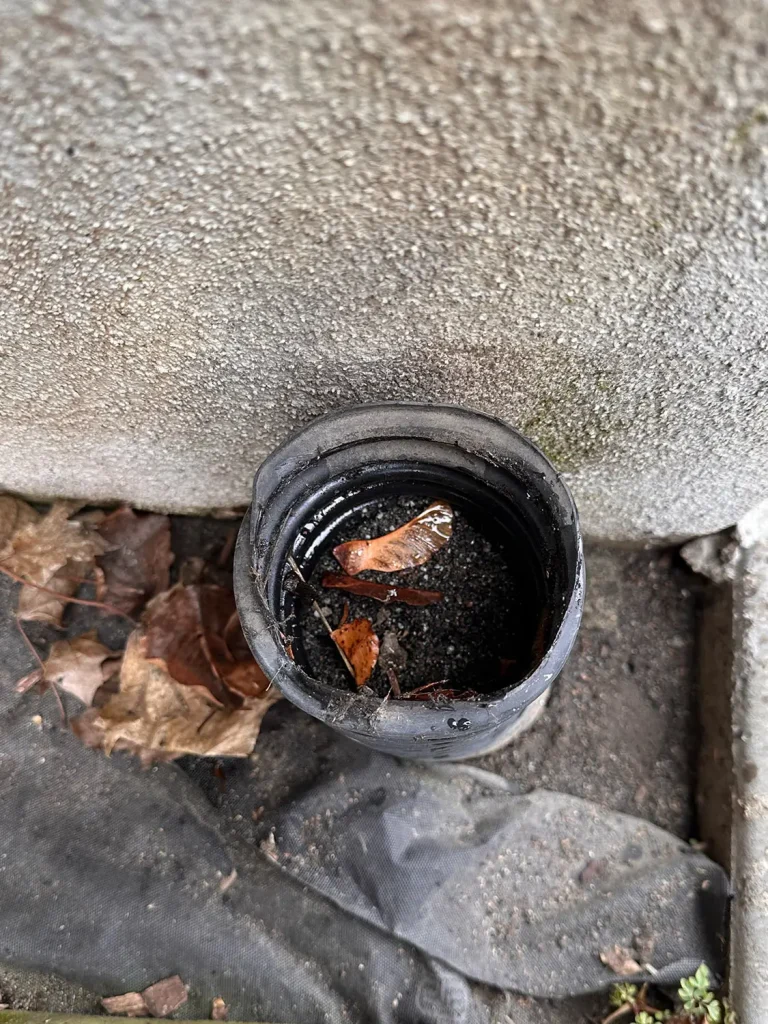
Downspouts don’t clog overnight. Debris builds up gradually until the passage narrows enough to stop water in its tracks. A few common culprits are usually behind it:
- Leaves, twigs, and seed pods, especially where trees hang over or near the roofline, break down inside the pipe and form a dense, soggy mat that traps even more debris behind it.
- Asphalt shingle granules wash into your gutters with every rainstorm and can collect inside the downspout. Over time, this buildup reduces the space available for water to flow through.
- Bird and rodent nests can form inside downspouts, especially when they offer a sheltered place for nesting. Twigs, moss, leaves, and other materials can quickly create a dense obstruction.
- Ice buildup might become a problem during colder months when partially blocked downspouts trap standing water. As that water freezes and expands, it can put pressure on seams, joints, and other vulnerable areas.
- Poor gutter slope or an undersized downspout system makes even small amounts of debris more difficult to flush away. Instead of moving along with the water, debris can settle inside and gradually contribute to a blockage.
What To Consider: Recurring downspout blockages may point to more than debris buildup. Consider factors like nearby trees, roof runoff volume, gutter design, and downspout size when looking for the reason behind repeated clogs.

Warning Signs of a Clogged Downspout
Catching a blockage early saves you from far bigger repairs down the road. A few signs typically show up well before serious damage sets in, and knowing what to look for during regular downspout maintenance means you can act before the next heavy rain makes the problem worse.
Overflowing Gutters During Rainfall
Water spilling over the sides of the gutter instead of channeling neatly into the downspout is the first and most obvious clue that something downstream is blocked.
This tends to show up at one specific section rather than the whole gutter run, which is helpful, since it points you to where the clog is likely sitting. Even a moderate rain shower is enough to reveal the problem if you happen to be watching.
Puddling Near the Foundation
Standing water or unusually damp soil around the base of a downspout can signal a blockage higher up the pipe. Instead of flowing freely through the system and away from your home, trapped water may be forced to back up and spill out where it shouldn’t.
Left unaddressed, repeated pooling can saturate the soil around the foundation and contribute to moisture intrusion, basement seepage, and other foundation-related problems over time.
Sagging or Pulling-Away Gutters
Trapped water is surprisingly heavy, and gutters straining under that extra weight can start to sag between hangers or pull away from the fascia board entirely.
You may notice dips between the supports, separated joints, or sections that no longer follow a straight line along the roofline. These changes can become more noticeable after periods of heavy rainfall.
Musty Smells or Visible Mold
A damp, musty odor or streaks of mold and mildew near the downspout exit usually point to water sitting somewhere it shouldn’t for too long. When a blockage disrupts drainage, moisture can collect around your siding, foundation, or nearby soil.
Over time, those consistently damp conditions can encourage mold and mildew growth, making a musty smell or dark staining worth investigating.
Slow or No Flow When Tested
Running a hose through the system from the top and watching water back up, trickle out slowly, or fail to appear at the bottom outlet is about as clear a confirmation as you’ll get.
It’s also one of the easiest checks to run yourself, and helps rule out guesswork by showing exactly whether the blockage is partial or complete.
Insurance data shows how costly water-related damage can become. In 2022, water damage and freezing accounted for 27.6% of homeowners insurance losses incurred. From 2018 through 2022, the average claim severity for water damage and freezing was $13,954.
A few minutes spent checking for these signs now is a small price compared to that kind of repair bill later.
Signs To Watch For: Watch for these early indicators of a clogged downspout:
- Water overflowing from gutters during rain
- Standing water near downspout outlets or foundations
- Slow drainage or no water flow during testing
- Gutters pulling away, sagging, or showing visible strain
- Musty odors, mold, or moisture around drainage areas
Step-by-Step: How to Keep Downspouts Clear
Once you know what to look for, cleaning downspouts is manageable with a consistent routine and the right tools.
Inspect Gutters and Downspouts Regularly
Set a seasonal schedule, ideally spring and fall, to walk the perimeter of your home and check every downspout outlet. Look for slow drainage, visible debris at the opening, or gaps where the downspout connects to the gutter.
Remove Debris by Hand or with a Scoop
Clear out leaves and buildup from the gutter section leading into the downspout first. A small gutter scoop or gloved hand can quickly clear loose debris before it gets carried farther down the pipe and contributes to a blockage.
Flush with a Garden Hose to Test Flow
Once the visible debris is cleared, run water through the system from the top. Steady, strong flow out the bottom confirms things are working. Weak flow or backup means something further down still needs attention.
Use a Plumber’s Snake or Downspout Auger
For blockages that won’t budge with water alone, a flexible plumber’s snake or a dedicated downspout auger can break up compacted debris and pull it free. Work it in from both ends if needed.
Install Gutter Guards or Downspout Strainers
Adding a strainer at the downspout opening or gutter guards along the system cuts down on how much debris makes it into the pipes in the first place. It won’t eliminate maintenance entirely, but it does reduce how often you need to intervene.
Trim Overhanging Branches Near the Roofline
Less overhanging foliage means fewer leaves, twigs, and seed pods landing directly in your gutters. This is one of the simplest ways to prevent downspout clogs before they even start.
Maintenance Checklist:
- Inspect gutters and downspouts for visible debris
- Clear buildup before it moves deeper into the pipe
- Test water flow after cleaning
- Check for recurring blockages after heavy storms
When to Consider Hydro Jetting or Professional Cleaning
DIY methods handle most day-to-day maintenance, but some clogs sit too deep or compacted for a hose and a snake to clear. The table below breaks down when hydro jetting and professional cleaning make sense.
| Situation | Best Approach | Why |
| Light seasonal debris (leaves, twigs) | DIY cleaning | Easily removed by hand or with a scoop and hose flush |
| Water flows but slower than usual | DIY cleaning with a plumber’s snake | Minor buildup often clears with manual tools |
| Repeated clogs despite regular cleaning | Professional/hydro jetting | Signals compacted debris deeper in the pipe than tools can reach |
| Downspout stays blocked after multiple attempts | Hydro jetting | High-pressure water clears the full interior, not just accessible sections |
| Musty smells, mold, or visible water damage | Professional inspection and cleaning | Trained eyes can catch joint or slope issues before they worsen |
| Older or narrow downspout systems | Professional cleaning | Reduces risk of damaging fragile or aging pipe material |
What To Expect:
- Basic cleaning can help remove common debris near the gutter and downspout opening
- Professional methods use specialized equipment to clean areas that are harder to access
- A proper cleaning approach helps keep water moving through the drainage system

Seasonal Maintenance Tips
Downspout care isn’t a one-time task. It works best as an ongoing rhythm tied to the seasons:
- Fall: Schedule a thorough cleaning after most of the leaves have dropped, since this is when debris accumulates the fastest.
- Spring: Check for damage or blockages left behind by winter ice and melting snow before spring storms arrive.
- After major storms: Do a quick visual check for new debris or damage, since heavy wind and rain can dislodge branches or shift existing buildup.
Staying consistent with this check is one of the most effective forms of downspout maintenance available, and it costs far less time than dealing with water damage later.
Key Takeaway: Regular seasonal checks help keep debris from building up, improve water flow, and make it easier to identify drainage issues before they require more extensive attention.
Leave the Tough Clogs to Utah Downspout Cleaning
The best time to think about your downspouts is before they start showing problems. A little debris today can become restricted water flow tomorrow, especially when seasonal buildup goes unchecked.
By paying attention to how your gutters drain and responding to early changes, you can keep minor issues from becoming part of a much larger water management problem.
When a clog goes beyond what you can safely clear yourself, Utah Downspout Cleaning is here to help.
Our team uses professional methods and equipment to remove stubborn debris from your downspouts and address buildup that basic cleaning may miss. That means a more thorough clean and a drainage system better prepared for the next rainfall.
Give your downspouts a fresh start. Schedule professional cleaning with Utah Downspout Cleaning today.
Frequently Asked Questions
1. How often should I clean my downspouts?
Downspouts should typically be inspected and cleaned at least twice a year, usually in spring and fall. Homes surrounded by trees may need more frequent cleaning because leaves, twigs, and other debris can build up faster.
2. What causes downspouts to become blocked?
Downspouts commonly become blocked by leaves, twigs, seed pods, shingle granules, bird nests, ice buildup, and other debris. Poor gutter slope or an undersized drainage system can also make blockages more likely.
3. How can I tell if my downspout is clogged?
Common signs of a clogged downspout include overflowing gutters, water pooling near your foundation, slow water flow, sagging gutters, and musty odors or visible mold near drainage areas.
4. Do gutter guards prevent downspout blockages?
Gutter guards and downspout strainers can reduce the amount of debris entering your drainage system, but they do not eliminate maintenance completely. Regular inspections are still needed to keep water flowing properly.
5. When should I consider professional downspout cleaning?
Professional cleaning is recommended when downspouts remain blocked after DIY attempts, water damage signs appear, or debris buildup keeps returning despite regular maintenance.
Share
Recent Posts

October 7, 2026
The Crucial Role of Gutter Downspouts in Protecting Your Home
Every drop of rain that lands on your roof has somewhere to go, and your gutters and downspouts determine where it ends up....

September 23, 2026
How Utah’s Spring Snowmelt Overwhelms Underground Gutter Drains
If your gutters and downspouts look perfectly clear, you might assume your drainage system is ready for spring. However, what if the real...
September 15, 2026
Hydro Jetting vs. Snaking for Underground Downspouts: Which Is Better?
A drain snake may break through a blockage, while high-pressure jetting can scour the inside of the pipe. But which method is better...