
Uncategorized
TL;DR
- A downspout drainage system carries roof runoff away from the foundation and other vulnerable areas.
- Gutters and downspouts work together to collect, move, and discharge rainwater safely.
- An underground gutter drainage system can move water away while keeping visible extensions out of the yard.
- Downspout maintenance helps catch clogs, damaged connections, and buried drainage problems early.
- Proper downspout drainage depends on a clear route, suitable discharge point, and enough capacity for rainfall.
Every drop of rain that lands on your roof has somewhere to go, and your gutters and downspouts determine where it ends up.
When rain hits your roof, water flows into the gutters, through the downspouts, and away from your home. That system works well when water has a clear path to follow. A clogged, damaged, or poorly positioned downspout can interrupt that flow, sending water toward the foundation or leaving parts of the yard saturated.
The risk becomes greater during periods of heavy rainfall because downspouts have to move a much larger volume of water away from the roof and foundation in a short time.
In July 2025, NOAA reported 1,434 flash flood warnings across the United States, the second-highest July total in 40 years. When such intense rain arrives quickly, clogged gutters, undersized downspouts, or poor discharge points can leave water backing up around the home instead of moving away from it. These problems may go unnoticed during smaller storms but become much more apparent when rainfall intensifies.
This guide explains how they direct runoff away from your home, what can interfere with that flow, and how regular maintenance can help keep your drainage system working properly.
Quick Answer: A properly functioning downspout drainage system protects a home by moving roof runoff away from the foundation, reducing concentrated water around the structure, and directing it toward a suitable discharge area.
Why Downspouts Matter More Than You Think
A downspout connects your roof drainage system to the ground, giving rainwater a clear route away from your home. Gutters and downspouts work together to manage runoff. Gutters collect water from the roof, while downspouts gather that water and direct it toward a suitable discharge area.
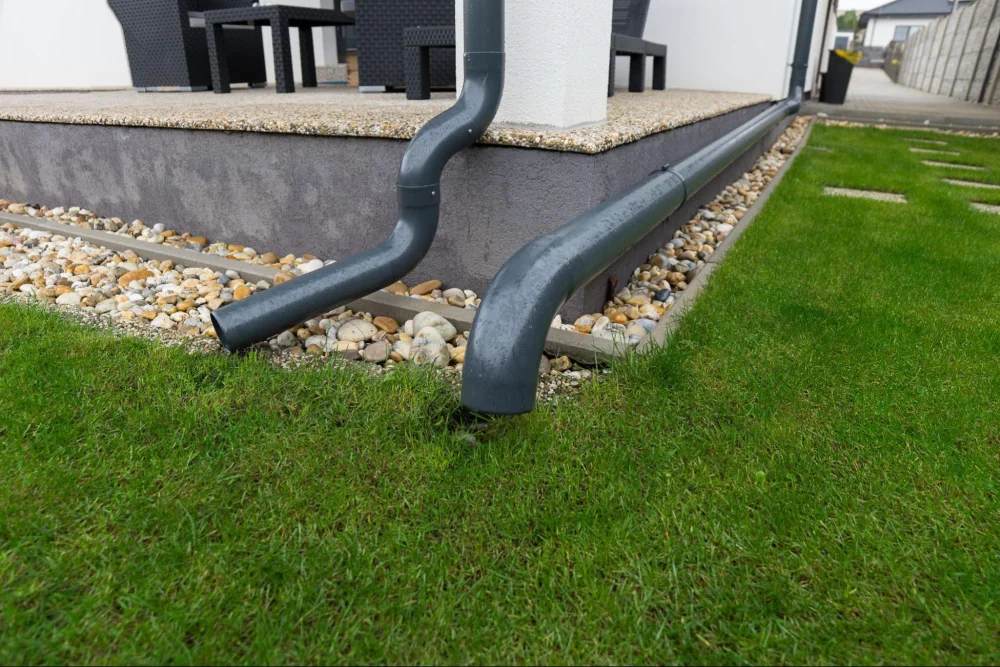
From there, a downspout drainage system can carry the water away through a splash block, an above-ground extension, or a buried pipe. The right setup depends on the property’s layout, slope, and drainage needs, helping move roof runoff away from areas where it could cause problems.
A downspout problem may seem minor until water starts collecting where it should not. Repeated runoff near the foundation can contribute to soil erosion, water intrusion, and foundation damage. Keeping gutters and downspouts clear helps reduce the risk of a small drainage problem turning into a much larger repair.
What This Means For You: The goal is not simply to move water out of the downspout. The drainage route should carry concentrated roof runoff far enough away from the home to reduce pooling and soil saturation near the foundation.

How a Downspout Drainage System Protects Your Home
A well-planned downspout drainage system does more than move rainwater away from the roof. It helps direct runoff away from vulnerable areas of your property and manage water before it creates drainage problems.
Moves Roof Runoff Away From the Foundation
Water collecting beside a foundation can saturate surrounding soil and increase the chance of moisture reaching vulnerable areas. Directing roof runoff away from the structure gives it a better path before it can collect beside the home.
Reduces Yard Pooling and Soil Erosion
Concentrated roof runoff can wash away soil and leave low spots saturated. Moving water to a suitable outlet helps reduce these problems.
Helps Manage Heavy Rainfall
Flooding can affect communities across the country, with FEMA reporting in 2025 that 99% of U.S. counties had experienced a flood event during the previous 20 years. While your downspouts cannot prevent major flooding, keeping them clear and functional can help manage the rainwater that falls directly on your home.
How It Works: A downspout drainage system protects the home by collecting roof runoff, carrying it through the downspout, and directing it to an appropriate discharge point. Keeping this path clear helps prevent concentrated water from repeatedly collecting near the foundation or low areas of the yard.
Gutters and Downspouts Work as One System
Your gutters and downspouts each handle a different part of the drainage process, but they need to work together to move rainwater away from your home effectively.
Gutters Collect the Water
Gutters catch rainwater as it runs off the roof and guide it toward the downspout openings. When leaves, dirt, or other debris build up inside the gutters, water may not reach the downspouts as it should.
Downspouts Carry It Away
Downspouts take the collected water from the gutters and carry it toward the ground. From there, the water may flow through an extension or into a drainage line. Clogs, dents, or loose connections can restrict this flow and leave water with fewer places to go.
The Drainage Route Finishes the Job
Getting water through the downspout is only part of the process. If a downspout releases a large amount of water directly beside the foundation, it can create pooling or soil saturation. A suitable discharge point gives the water somewhere to go and helps keep runoff away from the home.
Common Mistake: A common mistake is assuming that a clear gutter and downspout automatically mean the drainage system is working properly. The discharge point and any underground drainage line also need to carry the water away effectively.

Above-Ground vs. Underground Downspout Drainage vs. Buried Downspout Drainage
The right drainage setup depends on your property’s layout, landscaping, and how far you need to move roof runoff. Here is how the main options compare:
| Aspects | Above-Ground Extensions | Underground Gutter Drainage | Buried Downspout Drainage |
| How it works | Moves water through visible extensions or splash blocks. | Carries gutter runoff through buried drainage lines to a suitable outlet. | Routes water from specific downspouts through underground piping. |
| Visibility | Easy to see and inspect. | Mostly hidden from view. | Mostly hidden from view. |
| Yard appearance | Extensions may be visible. | Creates a cleaner-looking yard across larger drainage areas. | Keeps individual downspout drainage components out of sight. |
| Maintenance | Easy to check for damage or blockages. | Harder to inspect without access points. | Problems can remain hidden below the surface. |
| Common concerns | Can cross walkways or interfere with landscaping. | Blockages may be harder to locate across longer drainage runs. | Sediment, roots, damaged sections, or clogs can restrict flow near downspout lines. |
| Best suited for | Properties where visible drainage is practical. | Homes that need broader gutter runoff carried farther from the foundation. | Properties where individual downspouts need concealed drainage to a yard outlet. |
Common Problems That Can Weaken Downspout Drainage
Recognizing these problems can help you catch them sooner. Many drainage issues begin with a minor restriction and become harder to notice as they develop underground.
Clogged Gutters and Downspouts
Leaves, seed pods, and dirt can limit water flow. Utah’s cottonwoods and maples shed plenty of material that can collect inside the drainage system.
Obstructed Underground Lines
Debris and sediment can enter buried pipes and settle around low spots or bends. A blocked downspout drain underground can force water back toward the house without leaving an obvious surface warning.
Root Intrusion
Roots naturally seek moisture and may enter through cracks, joints, or openings around pipe connections. Once inside, they can expand and collect additional debris.
Crushed, Shifted, or Damaged Pipes
Settling ground, heavy landscaping machinery, parked vehicles, and age can damage or move buried pipes. Misaligned connections can slow water flow and allow sediment to accumulate.
Improper Discharge Location
Even a clear downspout can create drainage issues when it releases water too close to the house. The pipe may be working correctly, yet the outlet location can still direct runoff toward the foundation.
Why Drainage Problems Keep Coming Back:
- Debris continues entering the system
- Underground deposits remain hidden
- Roots grow back through pipe openings
- Damaged sections continue limiting flow
- Water exits too close to the foundation
Signs Your Downspout Drainage System Needs Attention
Some drainage problems become obvious during rainfall, while others show up as subtle changes in how water moves around your property. Watching these signs can help you identify a restriction before it causes more serious drainage issues.
Water Backs Up During Rain
If water rises around the top of a downspout while it is raining, there may be a blockage further down the line.
Gutters Overflow Even When They Are Clean
When clean gutters continue to overflow, the problem may be inside the downspout or underground drainage pipe rather than in the gutter itself.
Pooling or Soggy Soil Near the Foundation
Persistent puddles or saturated soil beside the house can indicate that roof runoff is not moving far enough away from the property.
Water No Longer Reaches the Underground Outlet
If an underground outlet discharged water during previous storms but now remains dry, a blockage may be preventing water from reaching the exit point.
Gurgling or Slow Drainage
Unusual gurgling sounds or slower-than-normal drainage can indicate a partial obstruction inside the pipe.
Erosion Around the Downspout or Drain Exit
Washed-out soil near an outlet can show that water is escaping with too much force or flowing somewhere it shouldn’t.
What to Check During the Next Rain:
- Does water flow steadily from each downspout?
- Is water collecting around any downspout?
- Is the underground outlet releasing water?
- Can you see water surfacing along the buried pipe route?
- Does one downspout drain differently from the others?
Downspout Maintenance That Helps Prevent Drainage Problems
Simple, consistent maintenance tips like these can keep water moving through the system and help catch small drainage issues before they become bigger problems:
Clean Gutters Regularly
Removing leaves and fine debris reduces the material that can enter the downspouts.
Inspect Downspout Connections
Look for loose joints, cracks, separation, dents, and visible leaks. Small defects can become more troublesome when heavy rain increases water volume.
Check Extensions and Discharge Points
Make sure extensions remain connected and that outlets have not become buried, blocked, or redirected by landscaping changes.
Inspect Underground Lines When Problems Persist
Cleaning the visible gutter and downspout does not clear every buried blockage. Recurring backups can point to a problem farther along the line.
Tip: Check gutters more frequently when your property has mature trees nearby or after periods of heavy weather. Removing debris before it reaches the downspouts can reduce the chance of downstream blockages.
When Professional Downspout Cleaning Makes Sense
Some drainage problems go beyond what you can reach with a ladder or garden hose. Professional service can be useful when you are dealing with:
- Clogged underground drainage lines
- Backups that return after surface cleaning
- Roots growing into buried pipes
- Drain caps hidden beneath overgrown Utah lawns
- Underground lines that are difficult to access
Cleaning gutters and downspouts at the roofline is different from clearing a buried drain pipe. A camera inspection can show what is happening inside the underground line, while high-pressure jetting can remove stubborn sediment, roots, and debris that basic tools may not reach.
Not every blockage requires jetting. An inspection can help determine whether the line needs cleaning, repair, or another solution. Finding a buried blockage early can also help you address the problem before it contributes to costly water damage.
Protect Your Home With Proper Downspout Drainage
A gutter system can collect and move rainwater effectively, yet your home can still face drainage problems if that water is released too close to the foundation or cannot reach its intended outlet. A complete drainage route matters, from the gutters and downspouts to the underground line and final discharge point.
Regular downspout maintenance helps catch visible issues before they become recurring problems. For buried lines, signs such as water backing up, pooling near the foundation, slow drainage, or little to no water reaching the outlet can point to a problem below ground.
When an underground line needs a closer look, Utah Downspout Cleaning specializes in locating and clearing buried drainage problems. If you are noticing slow flow, pooling, or repeated backups around your downspouts, our technicians can inspect your downspout drainage system, identify what is happening below ground, and determine the right solution.
Schedule a free bid to get your drainage system checked and keep roof runoff moving where it belongs.
Frequently Asked Questions
What is the main purpose of a downspout drainage system?
Its main purpose is to carry roof runoff from the gutter system to a discharge point away from vulnerable areas of the property.
How far should downspouts direct water from the foundation?
The appropriate distance depends on the property’s drainage conditions, discharge method, grading, and local requirements. The goal is to keep concentrated runoff from collecting beside the foundation.
Are underground downspout drains better than above-ground extensions?
Neither option is automatically better. Above-ground extensions are easy to inspect, while buried lines can keep the yard clear. The right choice depends on the property and outlet location.
How often should downspouts be cleaned?
Cleaning frequency depends on nearby trees, roof debris, weather, and the type of drainage system. Regular inspections can help determine when cleaning is needed.
What are signs of a clogged underground downspout?
Common signs include water backing up at the downspout, slow drainage, pooling along the buried route, soggy soil, or no water reaching a normally active outlet.
Can a professional clean a buried downspout drain?
Yes. Depending on the pipe’s condition and the blockage, professionals may use inspection cameras, specialized cleaning tools, or hydro jetting to clear the line.
Share
Recent Posts

October 7, 2026
The Crucial Role of Gutter Downspouts in Protecting Your Home
Every drop of rain that lands on your roof has somewhere to go, and your gutters and downspouts determine where it ends up....

September 23, 2026
How Utah’s Spring Snowmelt Overwhelms Underground Gutter Drains
If your gutters and downspouts look perfectly clear, you might assume your drainage system is ready for spring. However, what if the real...
September 15, 2026
Hydro Jetting vs. Snaking for Underground Downspouts: Which Is Better?
A drain snake may break through a blockage, while high-pressure jetting can scour the inside of the pipe. But which method is better...